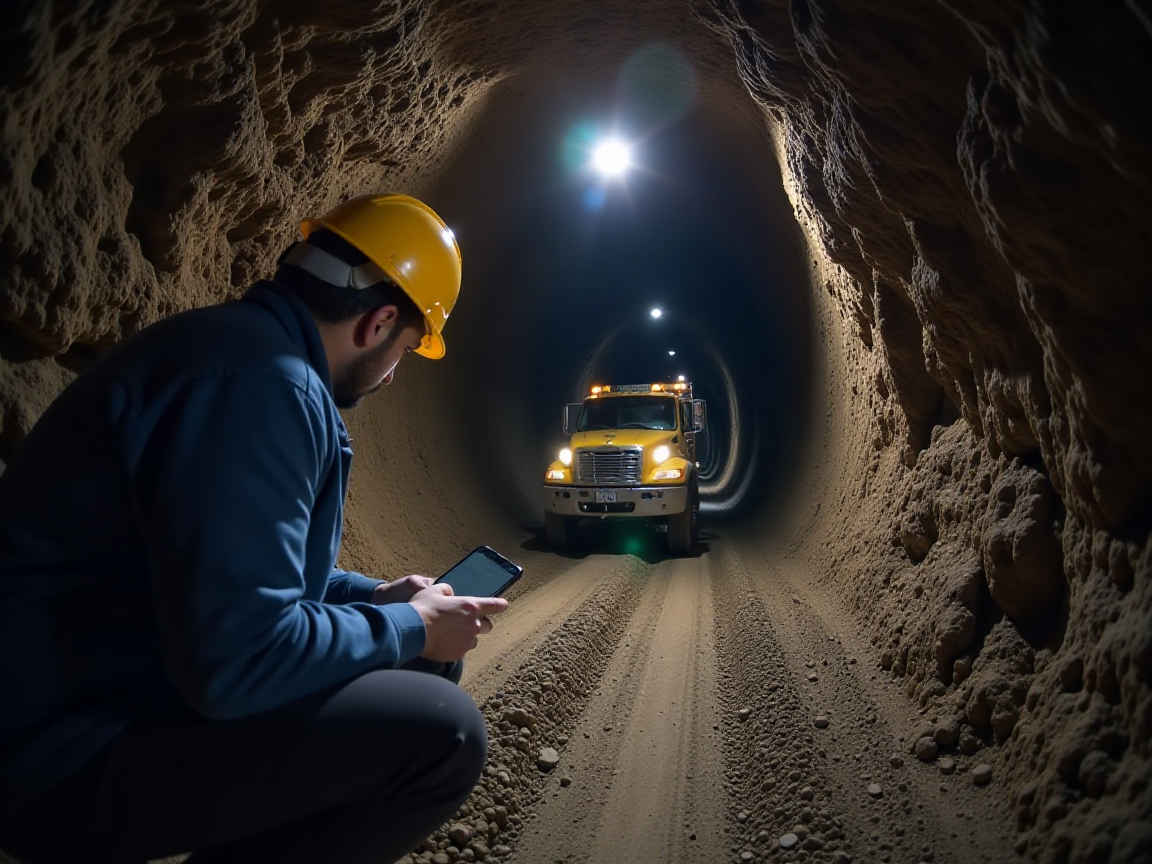
In the ever-evolving world of underground mining, technology has become a game-changer. With the increasing demand for minerals and the challenges of working in complex, hazardous environments, innovative solutions are revolutionizing how mining companies detect and manage underground operations. From seismic sensors to autonomous drones, these cutting-edge technologies are enhancing safety, boosting productivity, and mitigating environmental impact.
In South Africa, one of the world’s largest mining hubs, these advances are particularly crucial. The country’s deep-level mining operations—some of the deepest in the world—pose unique challenges in terms of worker safety and resource extraction. South African companies are at the forefront of developing and deploying detection technologies that ensure safe and efficient mining practices. Let’s explore some of the most notable technologies transforming underground mining detection and how South African companies are leveraging them.
1. Seismic Monitoring Systems: Enhancing Early Warning Capabilities
Seismic monitoring has long been a cornerstone of underground mining detection. By measuring vibrations and seismic waves, mining companies can identify potential geological hazards like rockfalls, gas pockets, or structural instabilities. Seismic sensors installed deep within mines can detect even the slightest tremors, giving operators the early warning they need to take action before a disaster strikes.
GroundProbe, a South African-based company, is a leader in seismic and radar monitoring for mining operations. Their innovative Slope Stability Radar system is widely used in underground mining to provide real-time monitoring of rock movement and stability. The system employs ground-penetrating radar to assess the deformation of rock structures, allowing mines to detect potential risks before they become critical threats.
2. Real-Time Environmental Monitoring: Ensuring Safe Air Quality
Underground mining environments are often plagued with hazardous gases, including methane, carbon monoxide, and other noxious fumes that can pose a significant risk to workers. In some cases, poor air quality can lead to dangerous explosions or long-term health issues.
Real-time environmental monitoring systems have become indispensable in tracking air quality and ensuring workers are not exposed to hazardous conditions. These systems can be equipped with gas sensors, air flow detectors, and temperature monitors, all of which help prevent disasters and maintain a safe atmosphere in the mine.
MineRP, a South African software solutions company, offers cutting-edge technology to optimize underground mine safety, including environmental monitoring solutions. Their MineRP Safety software integrates real-time air quality data from multiple sensors and delivers actionable insights to improve decision-making and worker safety. It helps mining companies track environmental hazards and respond swiftly to mitigate risks.
Additionally, Airtec, another South African company, specializes in developing gas detection systems specifically for underground mines. Their sensors can detect a wide range of gases, including carbon monoxide, methane, and oxygen levels. These solutions are crucial for preventing dangerous gas accumulations and ensuring worker health.
3. Autonomous Robots and Drones: Redefining Inspection and Data Collection
One of the most exciting advancements in underground mining detection is the use of autonomous robots and drones. These devices can explore areas that are too hazardous or inaccessible for human workers, performing inspections, mapping tunnels, and gathering essential data without risking lives. Equipped with cameras, thermal sensors, and LiDAR technology, autonomous robots are revolutionizing the way mines operate.
Robotics Systems, a South African company specializing in robotics and automation, has developed autonomous robots for underground mining applications. Their robots are designed to navigate complex mine tunnels, inspecting key infrastructure such as ventilation shafts, conveyor belts, and machinery. These robots are fitted with advanced sensors to detect any irregularities, which can be instantly flagged for further investigation.
In addition, Aerial Imaging, another South African company, has developed autonomous drones that can fly through underground tunnels, mapping and scanning vast areas with remarkable precision. The drones can be equipped with high-resolution cameras, thermal imaging sensors, and LiDAR to generate 3D maps of mines, allowing for detailed inspections and analysis without the need for human entry into potentially dangerous environments.
4. Advanced 3D Imaging and Mapping Technologies: The Future of Mine Visualization
3D imaging and mapping technologies are dramatically improving how mining companies understand their underground operations. These technologies use a combination of LiDAR, laser scanning, and photogrammetry to create high-resolution, 3D models of underground mines. These models help miners visualize the mine structure, plan extraction methods, and identify any potential hazards that may be difficult to detect through traditional means.
With the growing need for more efficient resource extraction and sustainable mining practices, 3D imaging is now a critical tool in minimizing environmental impact and maximizing resource
Geophysical Technologies, a South African company specializing in geophysical services, has been using advanced LiDAR scanning techniques to map underground mining environments with incredible accuracy. Their systems create detailed 3D images of the mine’s geological structure, helping companies identify ore deposits, structural weaknesses, and other hazards. This level of insight allows for better decision-making when it comes to mine planning and operation optimization.
Another notable company is PDS (Personal Detection Solutions), which provides underground mine surveying services using LiDAR and laser scanning technology. Their 3D models help visualize and assess mine conditions, optimizing production efficiency while ensuring the safety of workers.
5. Wireless Communication Networks: Connecting the Depths
In deep underground mines, maintaining reliable communication can be challenging. Traditional communication methods, such as wired systems, are often prone to failure due to the harsh mining environment. However, wireless communication systems, particularly those powered by Wi-Fi, Bluetooth, or mesh networks, are overcoming these challenges.
Wireless technology enables miners to communicate in real time, ensuring that workers in remote sections of the mine can quickly report any issues or emergencies. Additionally, these systems support data transmission from underground sensors, allowing for continuous monitoring of mining conditions.
CSE (Continuous Seismic Engineering), a South African company, has developed a wireless communication system designed specifically for underground mining. Their system uses Wi-Fi mesh networks to enable seamless communication between workers, surface control rooms, and detection systems deep within the mine. This technology improves safety by allowing real-time updates on mining conditions, worker status, and equipment performance.
Furthermore, Minopex, a leading South African mining services company, utilizes wireless sensor networks to ensure continuous monitoring of mining environments. These networks enable the rapid transmission of data from critical points in the mine, such as ventilation shafts, ore bodies, and critical infrastructure, to surface teams. With this data, they can instantly respond to changing conditions and potential threats.
6. Artificial Intelligence (AI) and Machine Learning: Predictive Mining and Hazard Detection
As AI and machine learning become increasingly sophisticated, they are being integrated into underground mining detection systems. These technologies can analyze large datasets to predict potential hazards, optimize extraction processes, and detect anomalies that might be missed by human operators.
AI systems use historical data, real-time sensor information, and predictive models to forecast geological events like cave-ins or gas leaks. By leveraging AI, mining companies can anticipate problems before they occur, improving both safety and operational efficiency.
MineVision, a South African AI company, has developed a powerful predictive analytics platform designed for underground mines. Using machine learning algorithms, the system analyzes data from seismic sensors, environmental sensors, and even worker behavior to predict potential hazards. The platform provides real-time insights into the safety of various mine sections and alerts operators to any potential issues, allowing them to take preventive action.
Conclusion: Shaping the Future of Underground Mining
The cutting-edge technologies revolutionizing underground mining detection are dramatically changing the landscape of the industry. With advancements in seismic monitoring, real-time environmental monitoring, autonomous robots, and AI-driven predictive models, mining companies are better equipped than ever to navigate the complexities and dangers of underground operations. South African companies are leading the charge in adopting and developing these technologies, improving safety and productivity while ensuring sustainable mining practices.
As mining companies continue to embrace innovation, the future of underground mining looks brighter and safer—thanks to the technologies that are, quite literally, working beneath the surface.
Written by Wayne Karie.