Air travel is one of the safest modes of transportation, but behind the scenes, it takes precision, planning, and protection to keep it that way. From aircraft hangars and fuel depots to baggage handling areas and control towers, the risk of fire in aviation infrastructure is real and preventable. At SCSP, we understand that in aviation, even the smallest fire-related incident can lead to flight delays, equipment damage, passenger safety risks, and significant financial loss.
The Complexity of Aviation Fire Risks
Aviation environments are unique because they house a concentrated mix of high-value assets, hazardous materials, and high-density human traffic. Unlike standard commercial buildings, airports must manage complex fuel delivery systems, oxygen storage, and massive hangars where a fire can spread rapidly due to large open spaces and the presence of flammable chemicals.
A Technical Fire Assessment is the first line of defense. It goes beyond a simple walkthrough; it is a data-driven evaluation of the specific hazards present in both landside and airside operations.
Key Focus Areas of Technical Assessments
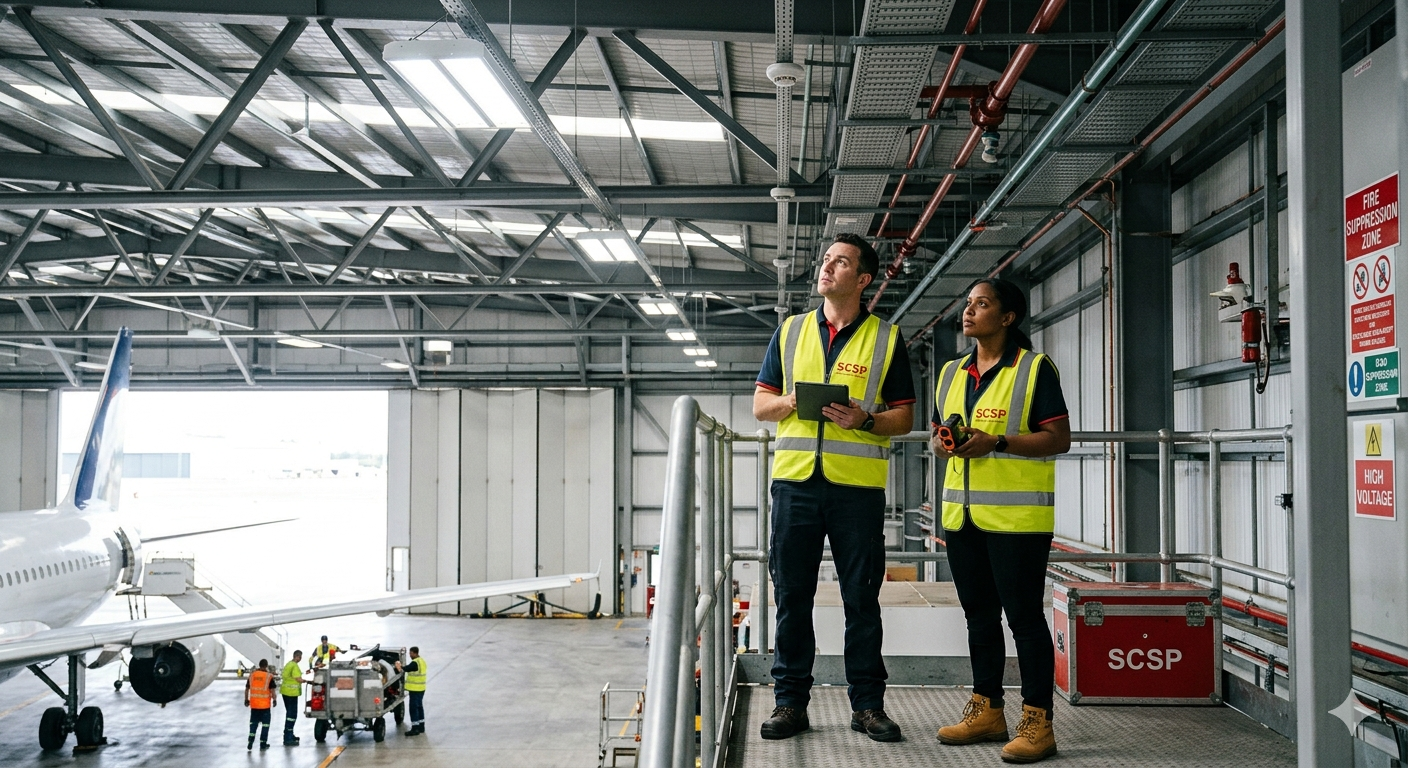
- Identifying Critical Risk Points Terminals are high-traffic zones that require seamless evacuation routes, while airside operations—such as maintenance hangars—face risks from welding, fuel leaks, and electrical faults. Assessments pinpoint exactly where these vulnerabilities lie to prevent a spark from becoming a catastrophe.
- Suppression for Sensitive Equipment Water-based sprinklers aren’t always the answer. In control towers and server rooms, water can cause as much damage as fire. Technical assessments recommend specialized suppression systems, such as clean agent gas or foam, which protect sensitive avionics and electronics without leaving residue or causing electrical shorts.
- Regulatory Compliance and Global Standards Aviation is a strictly regulated industry. Assessments ensure that facilities meet the rigorous standards set by the International Civil Aviation Organization (ICAO) and local aviation authorities. Staying compliant is not just about avoiding fines; it is about maintaining the certifications required to operate internationally.
Supporting Continuity and Preparedness
In the aviation world, time is the most valuable currency. A minor fire in a baggage handling area can ground dozens of flights, creating a ripple effect across global networks. By identifying risks early, Technical Fire Assessments allow for the implementation of redundant safety measures that support continuity of operations even during an emergency.